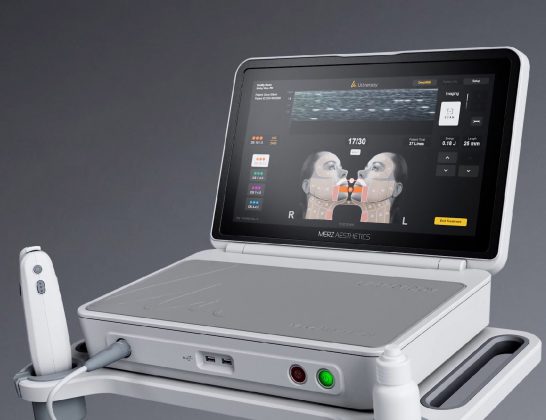
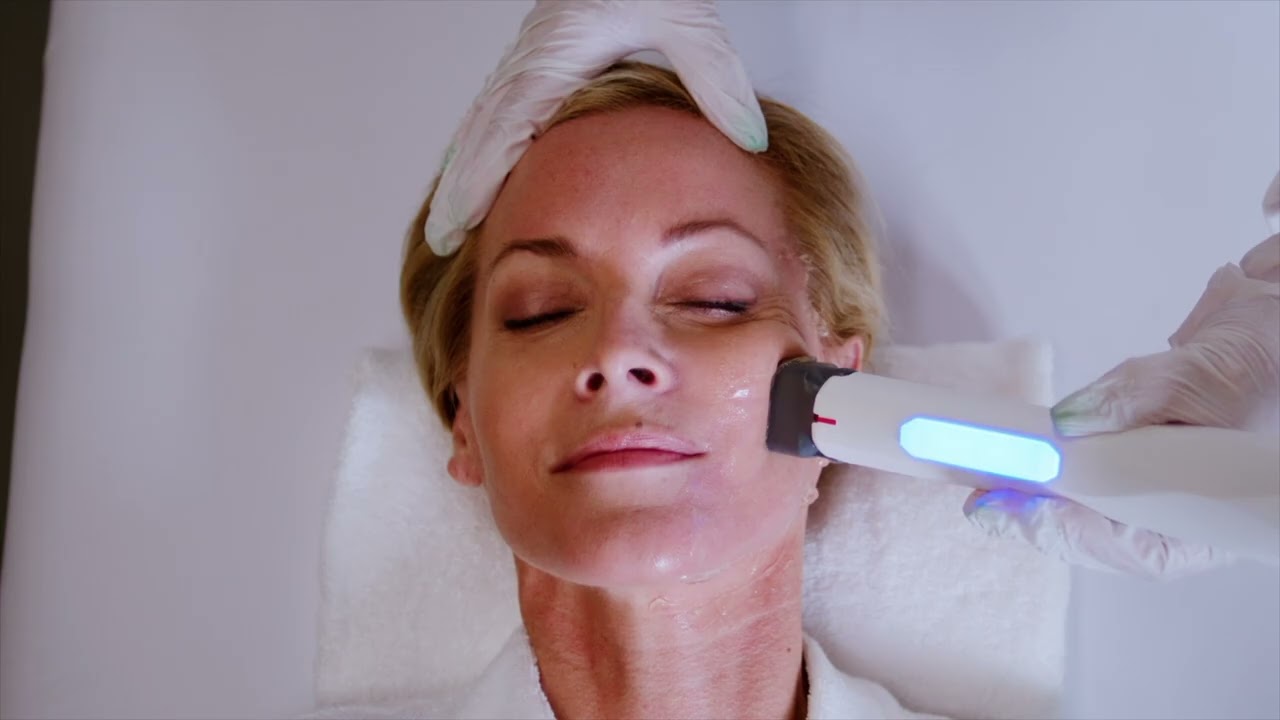

The eye area is, without question, the hardest part of the face to treat well. It’s also usually the first place patients notice ageing – a browline that’s started to sit lower, upper lids that look heavier by evening, fine crepiness that no amount of eye cream seems to touch. I see this every week in clinic, and for a long time, our non-surgical options for this specific area were limited.
Part of why this area ages first isn’t just the thin skin – it’s structural. The eyebrow position, the upper eyelid skin, and the deeper ligaments and muscle layer supporting them all shift gradually with age, and that combination is what produces a heavier or more hooded look well before the rest of the face shows obvious change. Treating it properly means addressing more than just surface fine lines.
That’s changed for me over the past year with XERF – specifically, since the E05 and E10 small tips, designed for the eye area, became available. I want to walk through what XERF actually is, why the eye area needed its own applicator in the first place, and how I’m using it in practice.
What Is XERF?
XERF is a dual-frequency monopolar radiofrequency (RF) device, approved by Korea’s Ministry of Food and Drug Safety (MFDS), that delivers controlled thermal energy into the deeper structural layers of the skin – the layers where collagen and elastin actually live, rather than just the surface. Unlike single-frequency RF devices, XERF combines two frequencies (6.78 MHz and 2 MHz) to let a practitioner adjust how deep the energy penetrates depending on the treatment area and the patient’s tissue characteristics.
Mechanically, this works by heating the skin’s structural layers to somewhere in the region of 50°C to 70°C – enough to trigger an immediate, visible contraction in existing collagen fibres, followed by a longer-term thickening response as the body lays down new collagen over the following weeks. At the same time, integrated surface cooling keeps the skin’s outer layer at or below roughly 43°C throughout, which is what makes this kind of heating possible without damaging the surface or routinely requiring numbing cream beforehand.
I’ve now used XERF for about a year across roughly 100 patients, mostly for lower-face and jawline laxity – the areas it was originally best known for. That experience is also what led to me being invited to speak alongside another practitioner at XERF’s Sydney Harbour launch event in Australia, where the device’s manufacturer, Cynosure Lutronic, brought together practitioners to share real clinical experience with the technology. In that conversation, I talked about why I’ve found XERF useful precisely because it isn’t a one-size-fits-all treatment – I tailor the depth and mode according to each patient’s facial structure, whether that’s a heavier face with more subcutaneous fat or milder early laxity.
But the eye area is where I’ve found it most interesting to work with, precisely because it’s the area conventional RF tips are unable to treat effectively.
Why the Standard Facial Tip Doesn't Work Well Around the Eyes
Most RF skin-tightening devices, XERF included, were originally built around larger facial tips – commonly sized around 3cm x 2cm – designed for broad, relatively flat areas like the cheeks, jawline, and neck. That size and shape works against you around the eyes for a few reasons:
- The skin is the thinnest on the entire face – periorbital skin has none of the cushioning that makes a larger tip safe elsewhere.
- The surface is curved, not flat – a flat tip can’t maintain even contact along the brow, upper lid, or outer eye corner, which means uneven energy delivery.
- The margin for error is small – precision matters more here than almost anywhere else on the face.
For years, doctors wanting to treat the eye area with RF energy were essentially working around a tool that wasn’t built for the job.
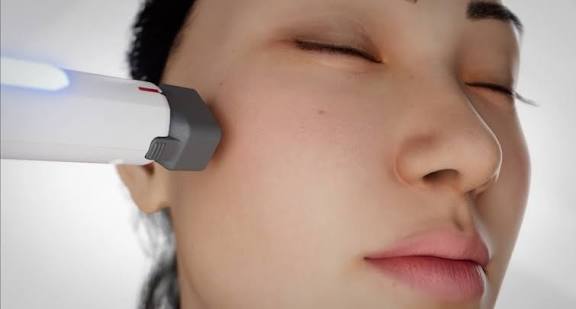
The Periorbital Small Tip: E05 and E10
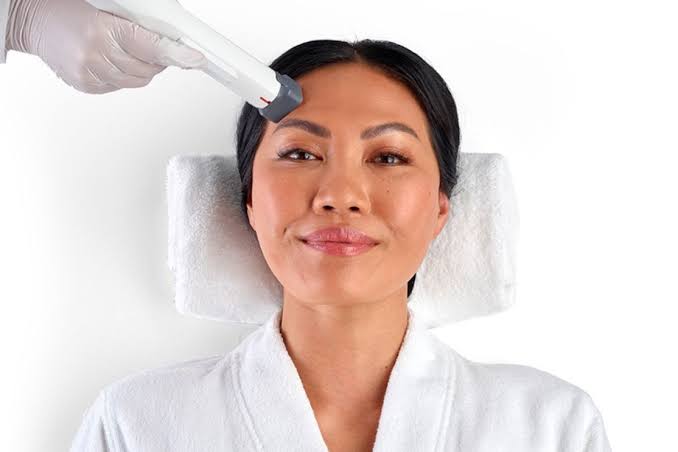
The dedicated small tips – designated E05 and E10 – change that. They’re purpose-built applicators, engineered specifically for curved, thin periorbital skin, with a smaller contact surface that allows much more controlled, vector-based energy placement along the brow, upper eyelid, lower lid, and outer eye corner. This isn’t a marketing add-on – it addresses a real, previously documented gap in how RF technology handled the eye area, and early clinical reporting on these tips has focused specifically on eyebrow position, upper-eyelid redundancy, and periorbital fine lines, with good tolerability so far.
In my own practice, I use the E05/E10 tips specifically for:
- Mild to moderate droopy or hooded upper eyelids – where the concern is skin laxity rather than excess fat requiring surgical removal
- Brow descent that’s making the eyes look more tired or hooded than the patient feels
- Fine periorbital lines and crepiness that skincare alone hasn’t been able to shift
I adjust depth and energy settings differently for the eye area than I would for the jawline – the eye protocol is inherently more conservative, prioritising precision and comfort over the higher energy levels used on thicker-skinned areas.
How This Compares to Other Non-Surgical Eye Treatments
Patients researching this area often come in having already read about Ultherapy or Thermage Eye, so it’s worth placing XERF in that context. Ultherapy uses focused ultrasound rather than RF, and is FDA-approved for a brow lift specifically, with some practitioners extending its use to the wider eye area. Thermage Eye is also RF-based but works at a single frequency, which limits how much a practitioner can adjust depth of penetration compared to a dual-frequency system. RF microneedling – which I also use for eye concerns in certain cases, under the RF microneedling protocol at my clinic – creates micro-channels in the skin to deliver energy more directly, which can be effective but comes with several days of visible downtime that XERF’s surface application doesn’t require.
None of these is strictly “better” in every case – they suit different concerns, skin types, and patient tolerances for downtime. What XERF’s periorbital tip adds to that landscape is a needle-free, monopolar RF option specifically engineered for the curvature and thinness of eye-area skin, which is why I’ve folded it into how I assess these patients rather than treating it as a replacement for everything else in that toolkit.
What to Expect During Treatment
Preparation is simple: the skin is cleansed, a coupling gel applied to help the energy transmit evenly, and a small return pad placed elsewhere on the body to complete the RF circuit – standard practice for any monopolar device. From there, I move the E05 or E10 tip in careful, mapped passes across the treatment area, adjusting energy level as needed within each pass depending on how the skin responds.
A XERF session around the eyes typically takes longer per area than the equivalent treatment on the cheeks or jawline, simply because the tip is smaller and the work is more deliberate. Most patients describe a warming sensation rather than sharp discomfort – XERF is generally tolerated without numbing cream, though I’ll always discuss comfort preferences with a patient beforehand. There’s no real downtime: mild warmth or slight redness afterward is the most you should expect, and most people go straight back to their day.
Results aren’t immediate in the way filler is. What you’ll typically see is a subtle firming in the days after treatment, with the more meaningful change building gradually over the following weeks to months as new collagen forms. This is a collagen-remodelling treatment, not a filler or a surgical lift – it works with your own tissue rather than adding volume or removing skin.
Who This Isn't For
I think it’s just as important to be upfront about the limits. XERF’s periorbital tip is not the right tool if:
- Volume loss, not laxity, is the main issue – a hollow under-eye or deflated temple usually needs dermal fillers or collagen biostimulators, not tightening alone.
- Drooping is severe enough to affect vision, or there’s significant excess skin – this moves into surgical assessment (blepharoplasty or ptosis repair), not aesthetic treatment.
- There’s active eye-area skin inflammation such as an eczema or rosacea flare, which I’d want settled before considering RF energy in the area.
Part of a proper consultation is being honest about which of these categories a patient actually falls into before recommending any energy-based treatment.
Common Questions I Get About This
Do I need numbing cream first? Most patients don’t – the integrated cooling makes XERF reasonably comfortable without it, though I’ll offer numbing cream for anyone who’s particularly sensitive or anxious about the sensation.
How many sessions will I need? This depends entirely on how much laxity is present. Some patients notice a worthwhile difference after a single session; others benefit from a short series spaced some weeks apart. I only recommend what the assessment actually calls for, rather than selling a fixed package upfront.
How long do results last? Because the treatment works by rebuilding your own collagen rather than adding filler, the improvement tends to be gradual but reasonably long-lasting. Skin continues to age normally afterward, so most patients maintain results with an occasional touch-up down the line rather than a one-off permanent fix.
Can it be combined with other treatments? Often, yes – if volume loss is contributing to the tired appearance alongside laxity, I’ll sometimes pair this with filler. If the underlying issue is more significant skin excess, I’ll say so plainly and discuss a surgical opinion instead of trying to stretch a non-surgical treatment further than it should go.
My Take
I’ve been genuinely encouraged by how the periorbital tip has expanded what’s realistically possible for eye-area laxity without surgery. It doesn’t replace a facelift or blepharoplasty for patients who need one – and I’ll say so plainly in consultation when that’s the case. But for patients in that in-between stage – noticing browline and upper-lid changes, not yet ready for surgery, cautious about downtime or discomfort – it’s given me a genuinely useful option I didn’t have a year ago.
If you’re curious whether this approach fits your specific eye concerns, the honest answer only comes from an in-person assessment – periorbital anatomy varies enormously from patient to patient. You can find more on XERF at Radium Medical Aesthetics, where I practice.